

Steel Rain is a set of rules for 1/300 scale science fiction miniatures.
Brigade Commander Modern Rules
Andy Watkins offers a set of free wargames rules called Brigade Commander, for games set in Cold War Germany. Given the equipment used, I suppose it also would be useful for gaming some other scenarios in which the combatants have old NATO and Warsaw Pace equipment.
Painting Fire Tutorial
Laszlo Jakusovszky has a tutorial on painting fire. Now you can do justice to those flaming pigs models that you’ve had in a box for years.
Painting Wood Textures Tutorial
The Hot Lead site has a tutorial on painting wood textures.
Playing The Batman Miniatures Game – Review
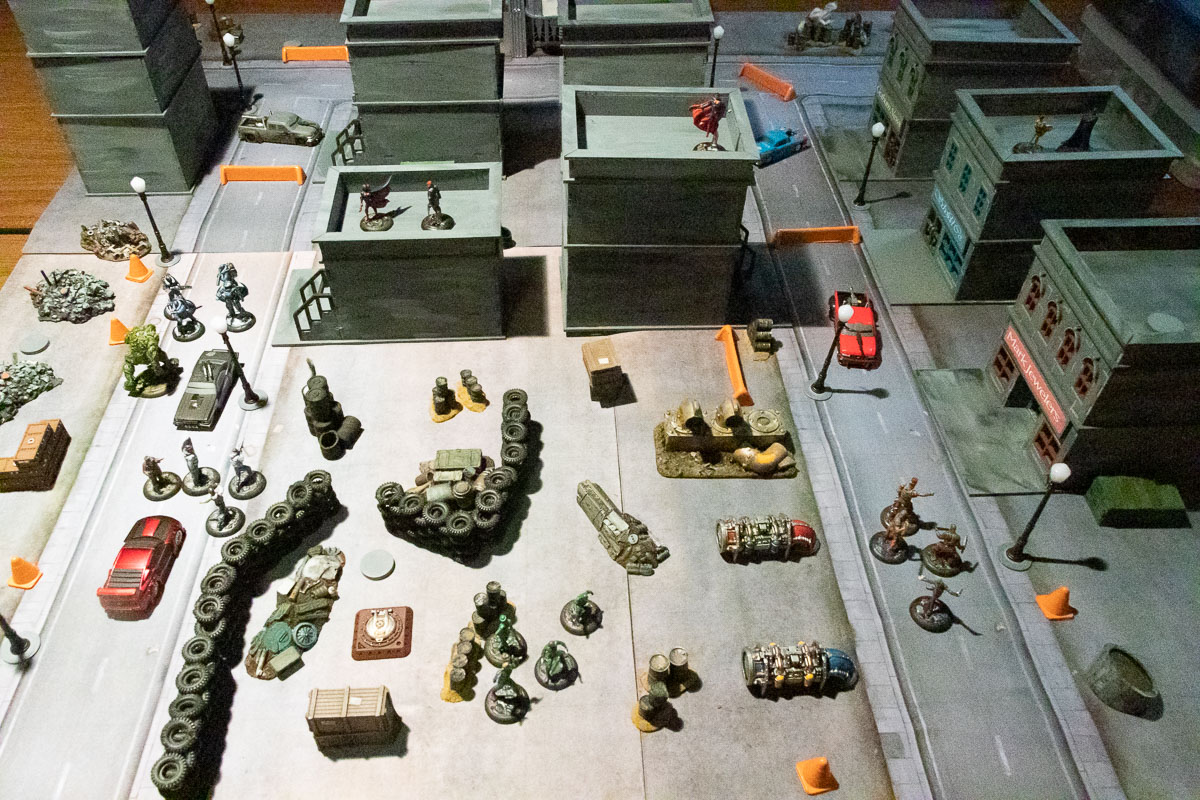
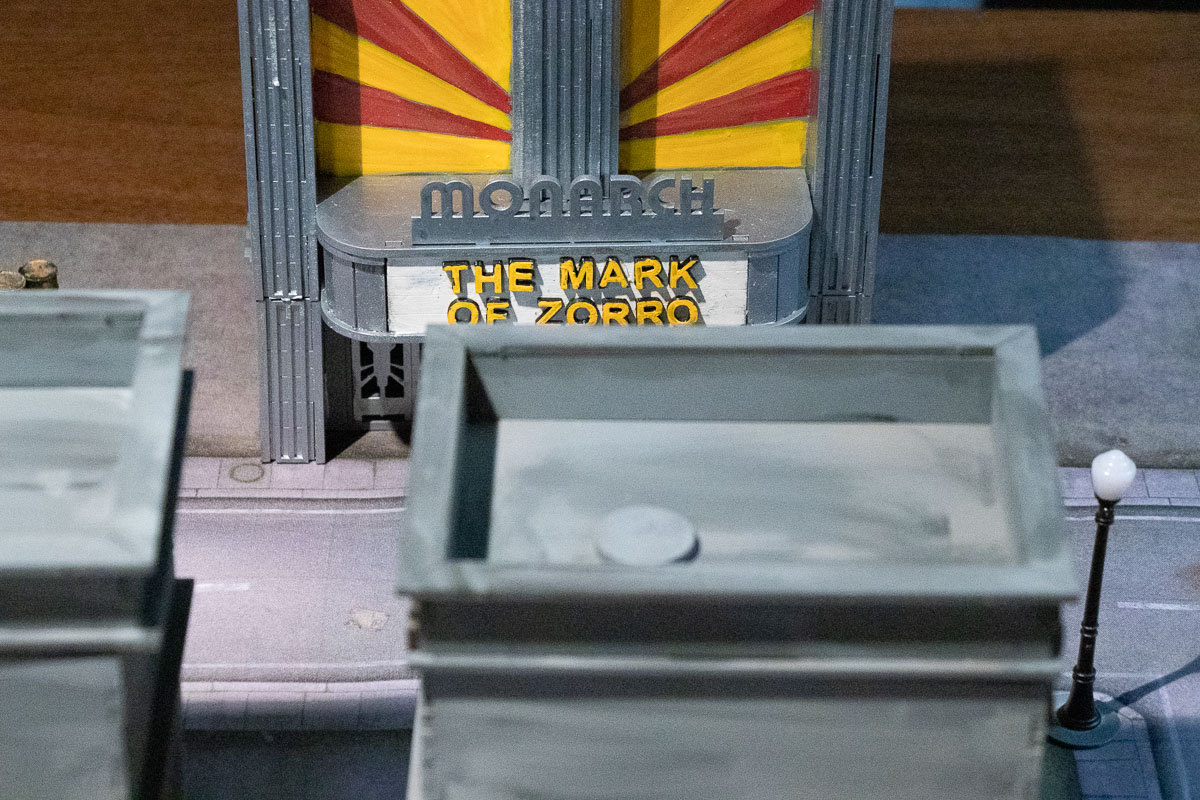
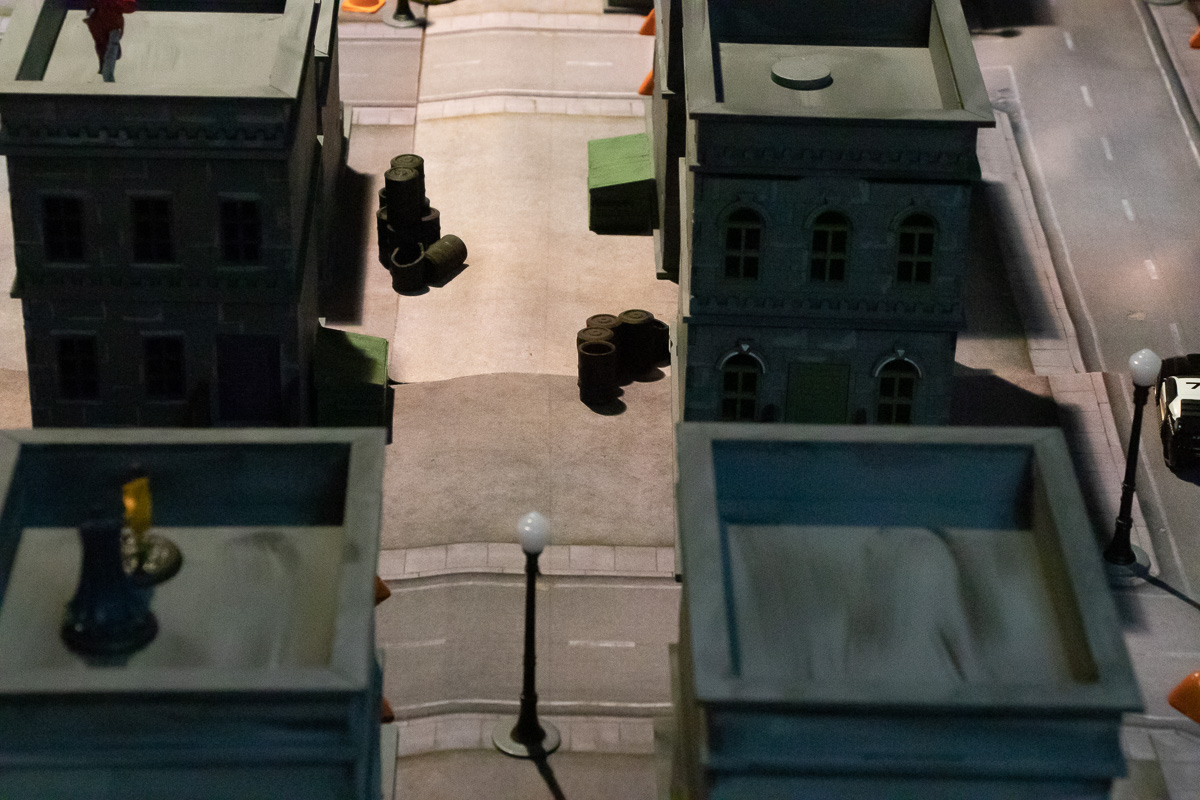
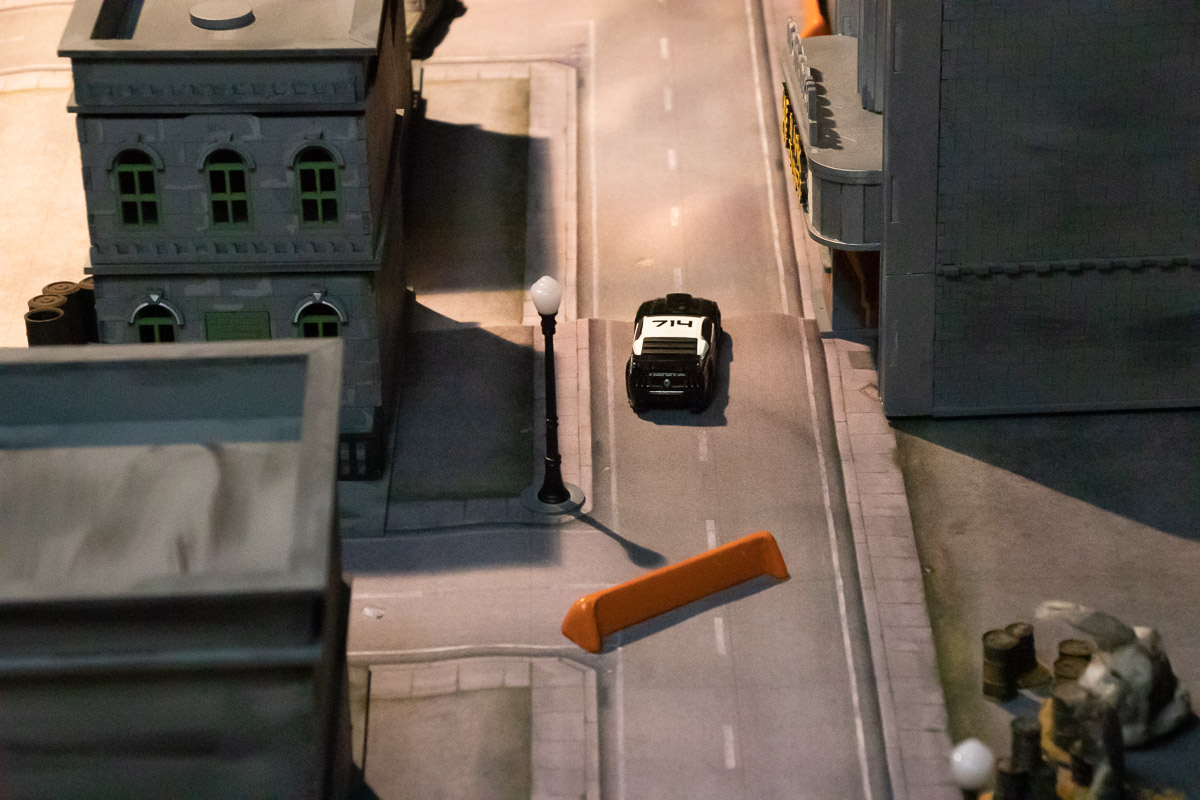
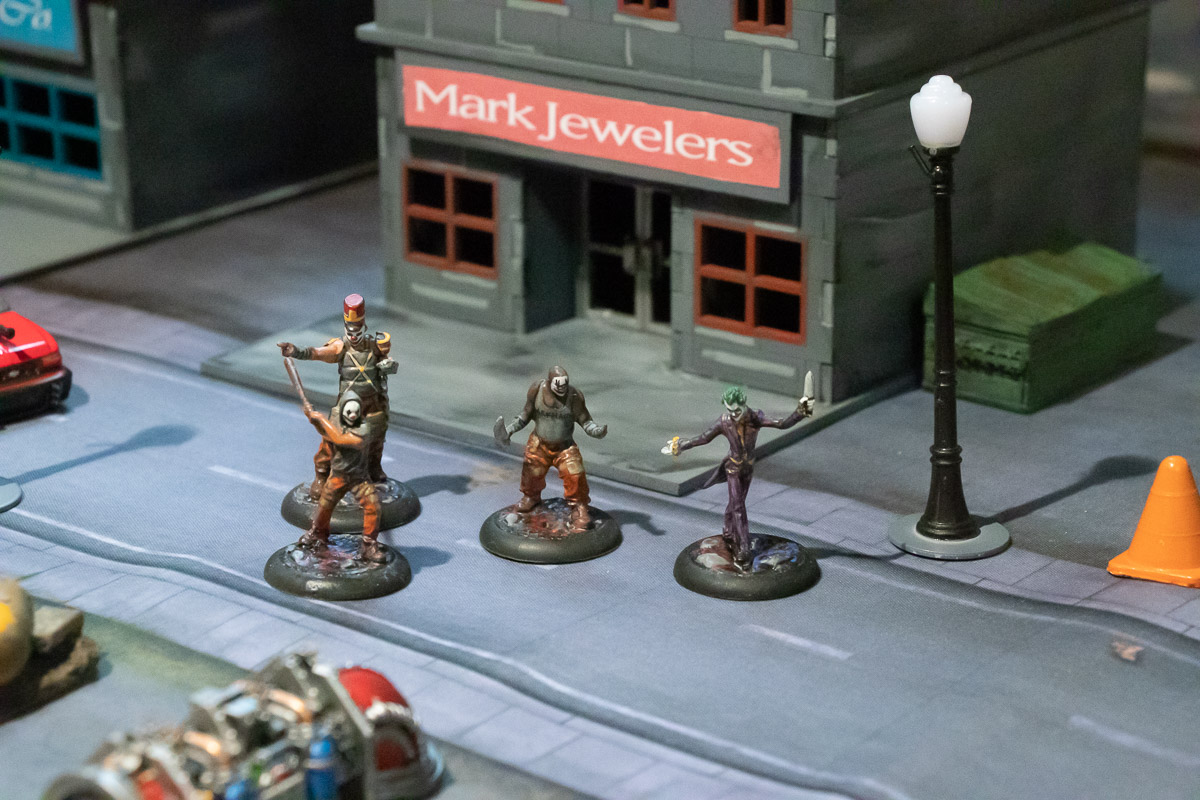
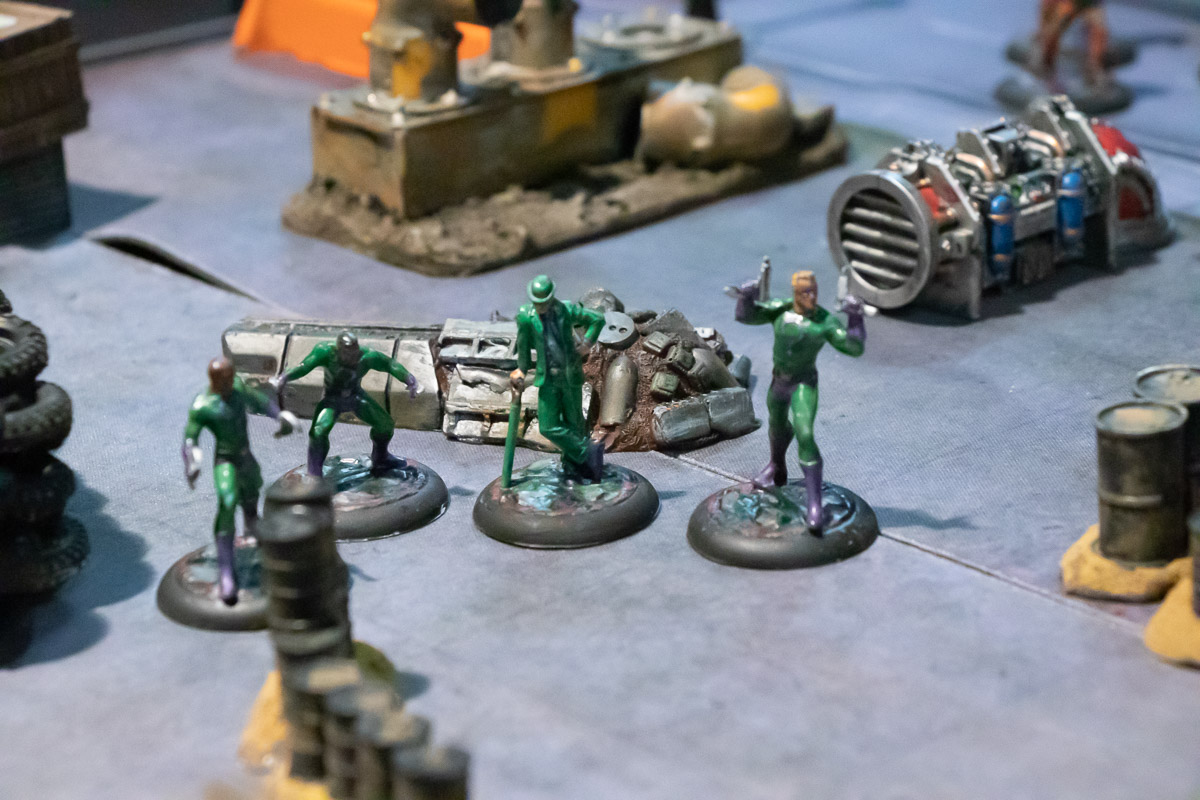

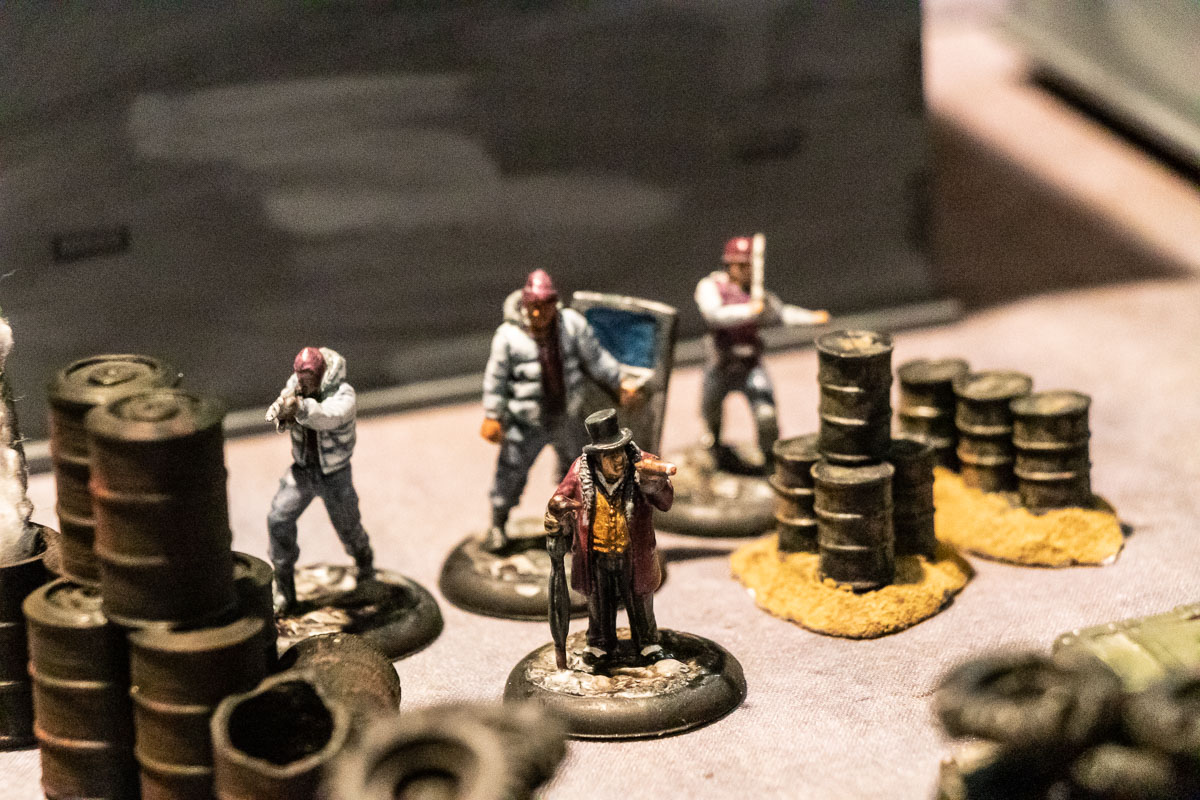


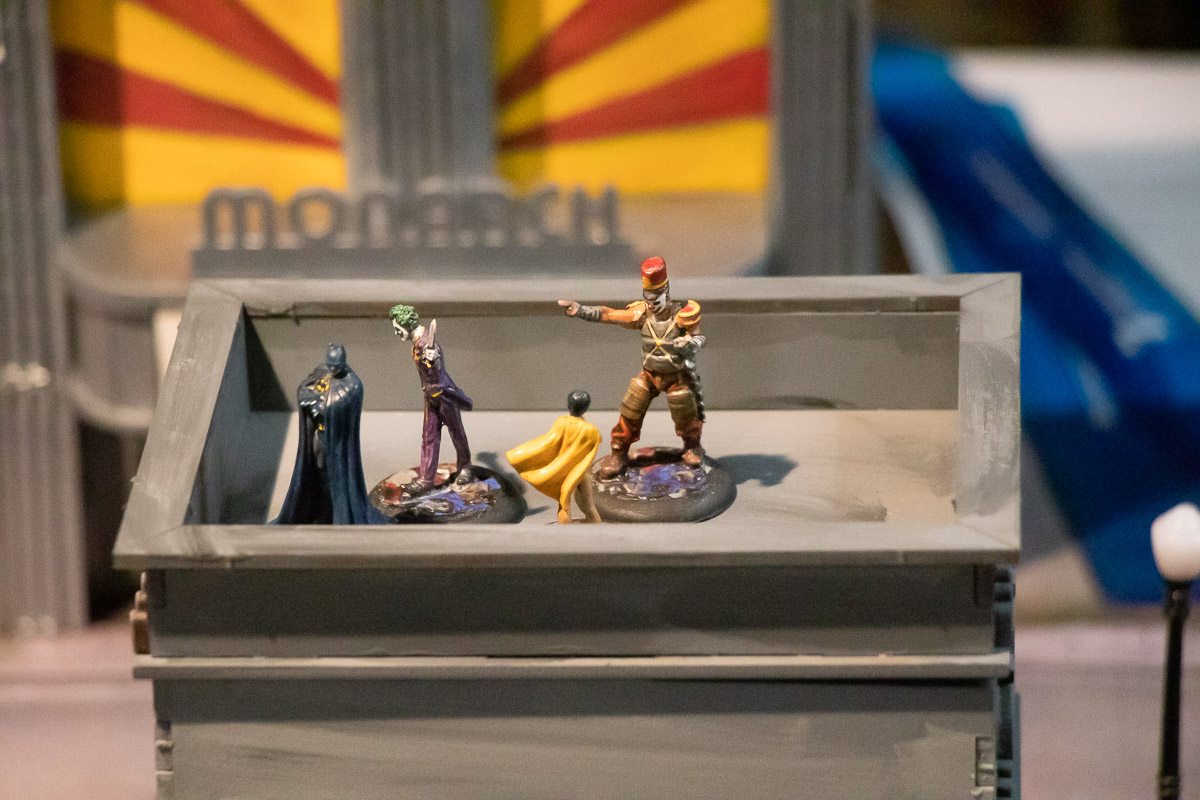
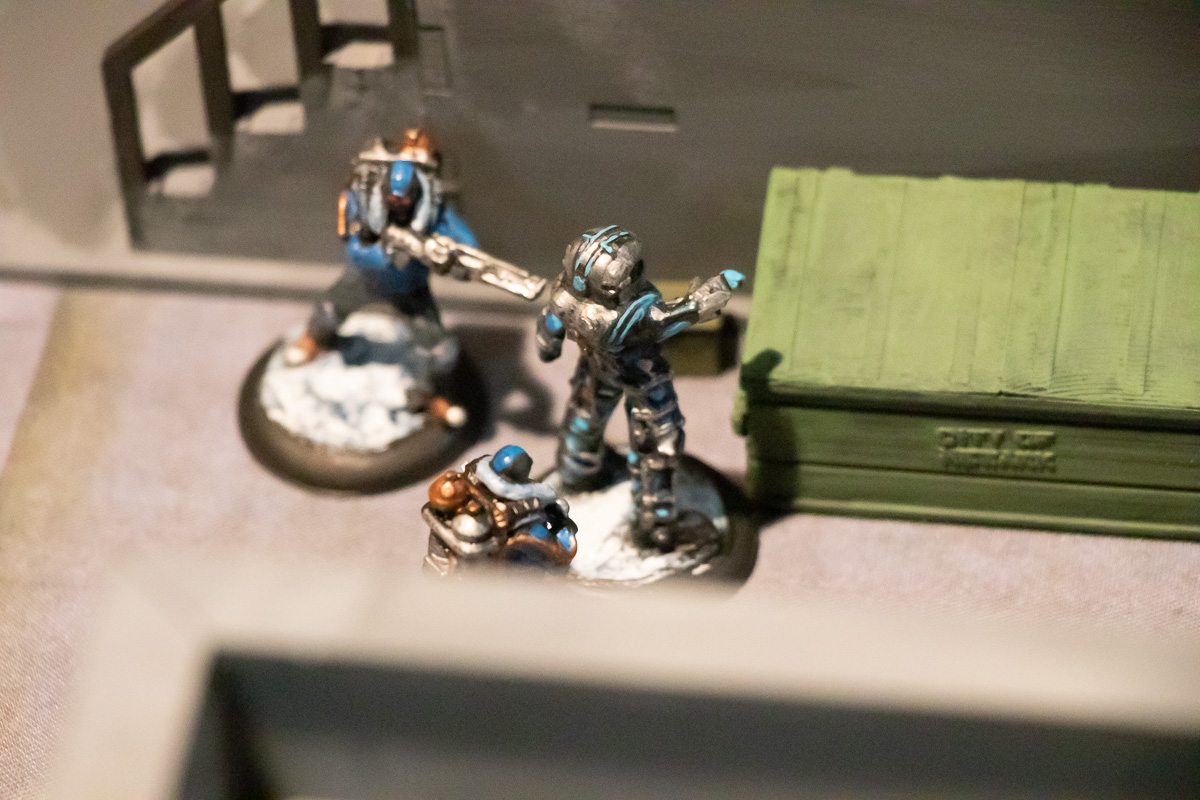
Some two years after I finished painting the figures, I got in a play of the Batman Miniatures Game on Saturday night. It was a seven player game, with the following teams/factions: Batman and Robin; Batwoman and Red Mask; Freeze; Joker; Penguin; Riddler and; Two-Face. In the scenario, a meteor with Kryptonite exploded over Gotham and all the factions are out to gather the bits.
I thought the game was a lot of fun (2nd edition). The combat mechanisms are pretty ordinary (roll to hit, roll to damage, target may get a dodge), but the planning phase is really good. In the planning phase, players have a certain amount of “Willpower” to allocate among four abilities: Movement, Attack, Defense and Special. On a character’s activation, he expends those points to carry out actions. The planning is sort of a mini game unto itself, where you must anticipate what actions you may need to do when your turn arrives.
The figures were a delight to paint, but a serious pain to assemble. Knight Models makes multipart figures with seemingly little rhyme or reason for the parts division. Joker, for example, inexplicably had a head separate from the body. There was no reason to do that. Other figures had random hands that needed to be attached; none of these made any sense. The figures are also realistically proportioned, which meant that tiny pieces like hands had little surface area to for glue to adhere. I was forced to pin nearly every part on these models, which was extraordinarily (and unnecessarily) laborious.
I can recommend the 2nd edition of the Batman Miniatures Game rules, but potential players should be prepared for a painstaking and exacting miniatures assembly process.